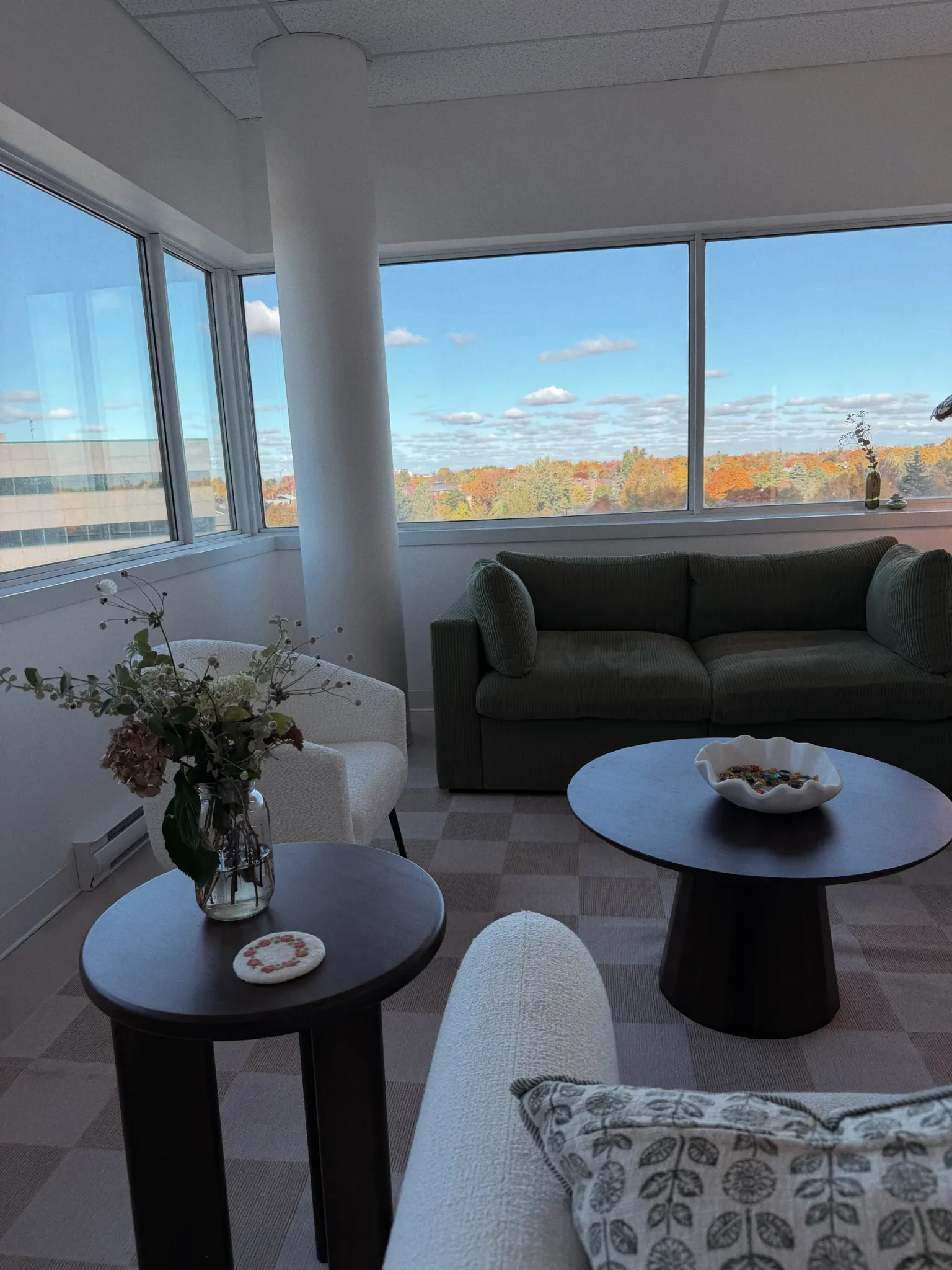
In Montreal, autumn arrives in colour. The trees turn, the air sharpens, and then, almost without warning, it is dark by the time you leave work.
For many people, that change comes with a shift in mood. Energy drops. Mornings feel harder. The couch feels more appealing than seeing friends. If this happens to you around the same time each year, you are not imagining it, and you are not alone.
What Is Seasonal Affective Disorder
Seasonal affective disorder, often called SAD, is a form of depression that follows the seasons. It was first described by researchers in 1984, who noticed that some people became depressed each fall and winter and felt better each spring.
Today it is recognized as major depression with a seasonal pattern. The key word is pattern. The low mood arrives and lifts at roughly the same time of year, for at least two years in a row.
Most people with SAD notice it in fall and winter. A less common summer pattern also exists.
How Common Is It in Canada
Living this far north matters. Seasonal depression is more common in places with shorter winter days.
- About 2 to 3% of Canadians will experience SAD in their lifetime.
- About 15% will have a milder form, often called the winter blues.
- SAD makes up about 10% of all depression cases.
So if the darker months feel heavy, you are in good company.
Winter Blues or Something More
Feeling a little flat in January is common. SAD is different in how much it affects your life.
The winter blues might mean you feel a bit tired and less motivated, but you still manage work, relationships, and the things you care about.
SAD tends to go further. It can make ordinary days feel like a struggle, and it keeps coming back each year.
Signs to Notice
Winter-pattern SAD shares many signs with other forms of depression, such as:
- Low mood most of the day, nearly every day
- Losing interest in things you usually enjoy
- Feeling hopeless or worthless
- Trouble concentrating
- Low energy
It also tends to bring a few signs of its own:
- Sleeping more than usual and still feeling tired
- Craving carbohydrates and eating more
- Weight gain
- Pulling away from people, a kind of hibernating
The summer pattern looks different. It is more likely to bring trouble sleeping, a smaller appetite, restlessness, and anxiety.
Why It Happens
Researchers are still learning, but light seems to play a central role. Less daylight can affect the body clock that tells us when to sleep and wake. It can also affect serotonin, which helps regulate mood, and melatonin, which helps regulate sleep.
In other words, SAD is not a lack of willpower. It is a real response in the body to a real change in the environment.
What Can Help
The good news is that SAD is well studied, and several approaches have strong research behind them.
Light Therapy
Light therapy means sitting near a bright light box, usually 10,000 lux, for about 30 to 45 minutes each morning. In a Canadian study, light therapy worked as well as an antidepressant medication, and it started working sooner.
Speak with a doctor before starting, especially if you have bipolar disorder, an eye condition, or take medication that makes you sensitive to light.
Talk Therapy
Cognitive behavioural therapy adapted for SAD helps you notice the thoughts that make winter feel heavier, and plan activities that bring back energy and connection. In one large study, people who had this therapy were less likely to have their depression return two winters later than people who used light therapy alone.
This is one reason therapy can be so valuable. It can give you skills you carry into each new season.
Medication
For some people, antidepressant medication is part of the plan. This is a conversation to have with a doctor or psychiatrist.
Small Daily Supports
- Get outside in daylight, even briefly, especially in the morning
- Sit near a window when you can
- Keep regular sleep and wake times
- Move your body in ways that feel good
- Plan things to look forward to during the darker months
- Stay in touch with people, even when you would rather hide away
These are not a cure on their own, but they can make the season feel lighter.
When to Reach Out
If low mood returns every fall, or if it makes work, school, or relationships harder, it is worth talking to someone. You do not need to wait until it feels unbearable.
At Jade Therapy, our clinicians can help you understand your pattern and build a plan for the months ahead. Learn more about individual therapy.
If you are having thoughts of suicide or feel unsafe, call or text the Suicide Crisis Helpline at 988, at any time. In an emergency, call 911 or go to your nearest emergency room. More support lines are listed on our contact page.
A Gentle Reminder
The seasons will keep changing. With the right support, the way you move through them can change too.
Spring always comes back.
References
- American Psychiatric Association. (2022). Diagnostic and Statistical Manual of Mental Disorders (5th ed., text rev.).
- Canadian Mental Health Association, BC Division. Seasonal Affective Disorder.
- HeretoHelp, BC Partners for Mental Health and Substance Use Information. Seasonal Affective Disorder.
- Lam, R. W., Levitt, A. J., Levitan, R. D., et al. (2006). The Can-SAD study: A randomized controlled trial of the effectiveness of light therapy and fluoxetine in patients with winter seasonal affective disorder. American Journal of Psychiatry, 163(5), 805–812.
- National Institute of Mental Health. Seasonal Affective Disorder.
- Rohan, K. J., Meyerhoff, J., Ho, S. Y., et al. (2016). Outcomes one and two winters following cognitive-behavioral therapy or light therapy for seasonal affective disorder. American Journal of Psychiatry, 173(3), 244–251.
- Rosenthal, N. E., Sack, D. A., Gillin, J. C., et al. (1984). Seasonal affective disorder: A description of the syndrome and preliminary findings with light therapy. Archives of General Psychiatry, 41(1), 72–80.